Mozart Motherboard
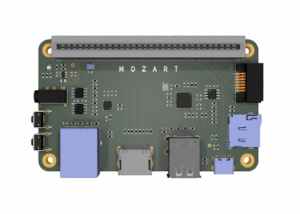
Mozart is the first of our next-generation computers. Mozart is a motherboard that requires a “Sechzig” compute module to operate.
Moving to a motherboard + module design was an obvious next step for us. Our computers were getting more complicated and we wanted to support FPGAs from multiple vendors. We also believe that we now know what functionality is necessary for useful “timeless” computers.
We will likely develop additional Single Board Computers as well. If you’ve already purchased one of our FPGA computers or plan to, don’t worry. Not only will we continue to support them, but they will likely gain improvements from the development of our next-generation computers.
Sechzig
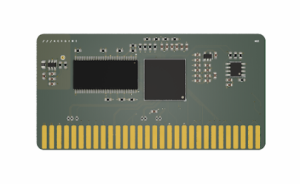
Sechzig is a work-in-progress compute module specification that takes the physical form of a 60-pin 2.54mm pitch edge card.
A lot of people are probably screaming at the screen “why didn’t you use <some other> connector?”
This is a good criticism and the connector will be a limitation of Sechzig. However, the mission of Machdyne is not to provide high-speed or cutting-edge features, but instead to support timeless applications with simple, reliable, understandable hardware.
We hope to offer FPGA modules, with a variety of memory configurations, from multiple vendors. We are also considering developing modules for various RISC-V ASIC SOCs in the future.
In the coming days you will be able to find additional details in the Sechzig GitHub repo.
Going Fully Open-Source
Mozart and the Sechzig modules will be our first fully open-source designs, including all schematic diagrams and PCB layouts.
We are also planning to begin open-sourcing the majority of our previous FPGA computer PCB designs, in addition to the schematics that we provide now.
This has always been our plan, but we’ve hesitated for two main reasons: (1) it will expose all of our ignorance and mistakes; of which there are plenty (2) it will be time-consuming to determine the redistribution licensing requirements of all symbols and footprints that we’ve at times haphazardly pulled into the various projects.
Despite the potential anguish, we feel obligated to fully open-source our designs in order to meet one of the stated goals of our mission:
Open; open-sourced software and hardware provide confidence about security, repairability and longevity
As with our other computers, we will also provide an open-source 3D-printable case design for Mozart.
Notice to Developers & Early Adopters
This is our most ambitious project yet and there is a possibility that the Sechzig specification will need to change during early revisions. As with our other computers, these boards should be considered as prototypes. If you’re still interested in buying one you can reserve a Mozart.
 Timeless (adj.) not affected by the passage of time or changes in fashion
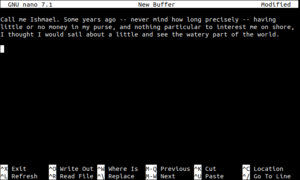 Writing. Kakao includes nano, a “small and friendly” text editor. Combined with automated backups to a secondary storage device (for example a USB drive) a writer can be productive in a secure, private and distraction-free environment.
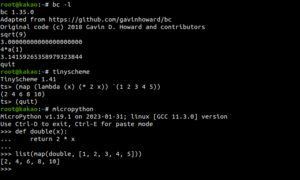 Math & Coding. Kakao includes the vi text editor, MicroPython and TinyScheme. Whether you’re a beginner or an expert you could easily spend hundreds of hours experimenting with algorithms and improving your skills using these three programs alone.
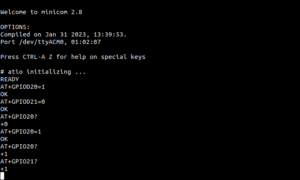 Automation. When combined with a
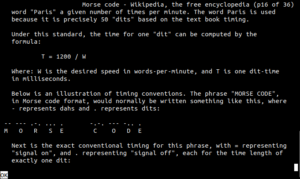 Survivalism. Our computers are built to last, simple enough to understand and repairable with common inexpensive electronics equipment. The extremely low power requirements make it feasible to run them off battery or solar power and our
 Education. Our computers are perfect for learning and teaching about computing, programming, SOCs, CPUs, FPGAs, digital logic and a lot more. The